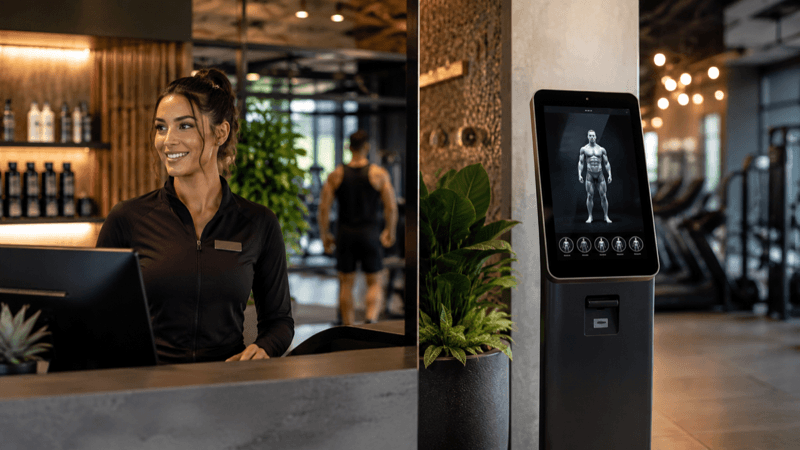
The AI vs. human receptionist debate in the fitness industry isn't really about replacement — it's about finding the right balance. Both have clear strengths, and the smartest fitness businesses use them together to maximize revenue and member satisfaction.
Where AI Excels at Fitness Businesses
AI handles high-volume routine tasks flawlessly: answering after-hours calls, explaining membership tiers, booking trials, scheduling classes and personal training sessions, sending class reminders, and responding to "what time do you close?" questions. It does this 24/7 without fatigue, sick days, or variation in quality.
- Answers every call on the first ring — no hold times, no voicemail
- Handles unlimited simultaneous conversations across phone, text, and web chat
- Integrates with Mindbody, Zen Planner, Wodify, Glofox, and Pike13 for real-time scheduling
- Walks prospects through membership tiers and current promotions
- Sends multi-channel class reminders and manages waitlists
- Works nights, weekends, and holidays without overtime pay
Where Humans Excel at Fitness Businesses
Humans excel at energy, motivation, and building personal connections. When a nervous first-timer walks in for a trial, a confident and enthusiastic staff member can make the difference between a sign-up and a "I'll think about it." The high-five at check-in, the encouragement after a tough class, the facility tour that sells the lifestyle — these are uniquely human skills.
The Trial Tour and Close
The in-person facility tour is the highest-converting touchpoint in the fitness sales process. A great tour guide reads body language, adjusts the pitch based on the prospect's fitness goals, introduces them to a trainer or a class in progress, and creates the emotional commitment that leads to a sign-up. AI books the trial. Humans close the trial.
The Hybrid Model: Best of Both Worlds
The most effective approach uses AI for the 80% of interactions that are routine — membership inquiries, class scheduling, reminders, trial booking, and after-hours coverage — while freeing your front desk to focus on the 20% that drive real revenue and loyalty: in-person tours, personal training upsells, member relationship building, and the high-energy atmosphere that keeps people coming back.
Fitness businesses running a hybrid AI + human front desk model report 20-30% higher membership conversion rates — not because AI converts better, but because the front desk staff finally has time to give every trial their full attention and energy.
The Cost Reality
A full-time front desk employee costs $55,000-$80,000/year after benefits, taxes, turnover, and training. AI Receptionist costs $3,588/year. Most fitness businesses that adopt AI don't fire their front desk — they reduce from two full-time staff to one, saving $55,000-$80,000 annually while actually improving coverage from 40-50 hours/week to 24/7.
The question isn't whether AI or humans are better. It's whether your current front desk setup lets your people do what they're best at — or buries them in phone calls, class booking requests, and membership questions that a machine handles better anyway.